
LIGHTWEIGHT, SAFE AND SUSTAINABLE PROTECTION
EPS, 100% recyclable
Polystyrene is lightweight, durable and safe: it protects products, is hygienic, customisable and recyclable, reducing costs and environmental impact.
Some good reasons to choose polystyrene packaging
LIGHTWEIGHT
Composed of 98% air, it is easy to handle and has low transport costs.
RESISTANT
Cushions falls and impacts, protecting packaged goods
SAFE AND DURABLE
It does not age and maintains its performance even in difficult environmental conditions.
WATERPROOF
It is vapour-permeable but waterproof: it does not absorb moisture and prevents the formation of mould.
REGISTRABLE
It is stackable, thanks to its excellent compression resistance.
VERSATILE
It allows for a wide range of shapes and sizes to optimise logistics and transport.
THERMAL INSULATION
Composed of 98% air, it ensures thermal insulation and temperature stability.
HYGIENIC
It does not promote mould or bacteria growth, does not release harmful gases, and is safe to handle.
Expanded polystyrene in the circular economy
Expanded polystyrene (EPS), often seen as polluting, is actually recyclable and part of the circular economy.
Composed of 98% air, lightweight and resistant, it can be collected and reintroduced into production processes without environmental impact. In Italy, CONAI and COREPLA manage its recovery through PEPS platforms, transforming it into new raw material for packaging, construction, street furniture and agriculture.
According to the Conversio study (2017), 56% of post-consumer EPS in Italy is already recycled and reused, confirming the environmental and productive value of this material.
INFINITELY
RECYCLABLE
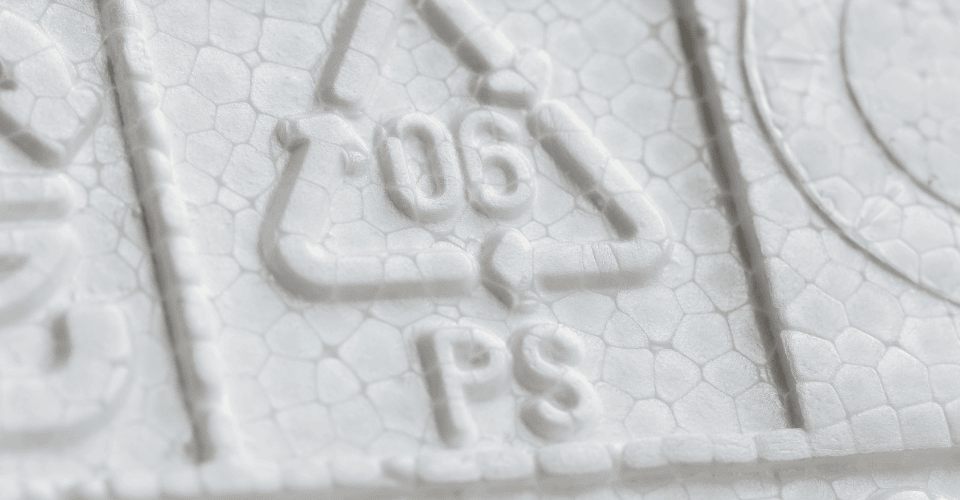
It is fully recyclable (PS06) in non-polluting processes.
ECOLOGICAL
Stabile, privo di sostanze dannose e a basso impatto ambientale.
Eco-Friendly ProductsEPS BA/BMB
Upon request, Politop manufactures eco-friendly products in BA/BMB expanded polystyrene, obtained from raw materials of biological origin, such as vegetable oils.
This technology allows the creation of sustainable class A+ items, maintaining the same performance as traditional EPS: quality, resistance, and versatility remain unchanged.
The BA/BMB version also guarantees a reduction in CO₂ emissions throughout the product’s life cycle.
At the end of its useful life, it can be recycled with plastic, recovered, and reintroduced into production cycles.
POLYSTYRENE versus CARDBOARD
In the debate on packaging materials, cardboard is often perceived as “green” and polystyrene as polluting. However, scientific analyses and studies show that expanded polystyrene can be a sustainable choice in many applications.
The table below shows a comparison between polystyrene and cardboard, considering functionality and the complete life cycle of the packaging (LCA), a fundamental parameter for defining the real sustainability of a product.
Expanded polystyrene EPS |
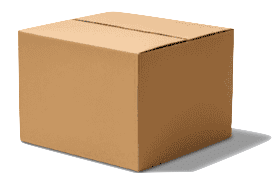
Cardboard |
|
|---|---|---|
| Weight | Extremely lightweight (98% air) reduces transport costs and CO₂ emissions | Heavier for the same volume (50% air) |
| Protection | Excellent shock absorption and thermal insulation; prevents damage and returns | Good protection but easily damaged |
| Moisture resistance | Does not absorb water, immune to mould and bacteria | It can deteriorate and develop mould |
| Versatility | Can be moulded into custom shapes | Standard formats and structures |
| Food safety | Chemically inert, safe for food and medicines | Safe, but sensitive to contamination from humanity |
| Recyclability | 100% infinitely recyclable; in Italy, over 20,000 tonnes recycled in 2022 (+25% vs 2019) and +15% estimated by 2025 | 100% recyclable. ~82–83% recycled in the EU. Recyclable 4 to 5 times. |
| Water consumption | ~6 L/kg | ~26 L/kg |
| CO₂ (GWP) | 4,6 kg CO₂/kg | 6,5 kg CO₂/kg |
| Public perception | Often viewed negatively | Perceived as environmentally friendly |
On balance
Expanded polystyrene combines lightness, protection and sustainability, often surpassing cardboard in terms of efficiency and environmental impact.
Politop promotes recycling through the PEPS platform and manufactures Class A+ eco-friendly items using renewable raw materials, confirming its commitment to sustainable packaging.